Yumbe Girls Break Silence on GBV, Child Marriage, and the Struggle to Stay in School
For 16-year-old Susan, staying in school has meant fighting battles far beyond the classroom. A Primary Six pupil at Yumbe Primary School, Susan says her education was nearly cut short after repeated domestic violence tore her family apart.
Speaking at the Brave Girls Festival held at Boma Grounds in Yumbe on September 28, 2026, Susan shared how witnessing violence between her parents eventually left her and her siblings without adequate support.
She says her father repeatedly beat her mother before the couple separated.
Her mother later left the family, while her father moved away and stopped providing support.
“When they sent us home because of school fees, I would go home, and there would be no one there to help us,” Susan narrated.
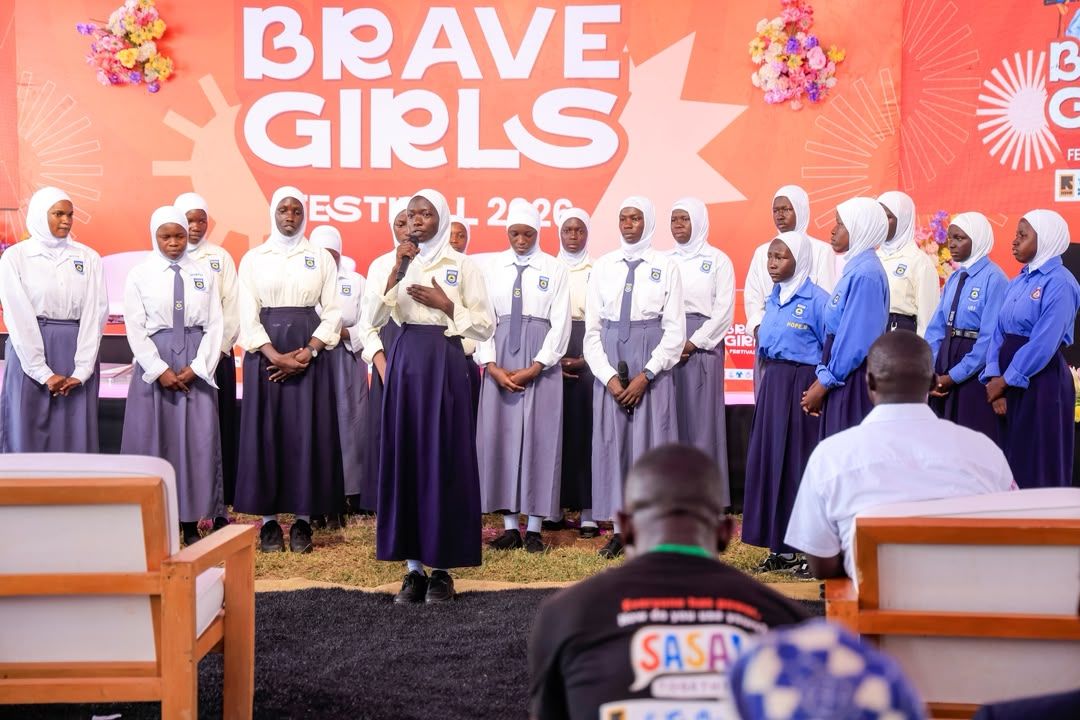
16-year-old Susan Speaking
With no one to pay her school fees, she dropped out and found work at a hotel, where she earned just UGX 2,000 a day washing utensils.
Her return to school came after one of her teachers, Mr Richard, found her working at the restaurant and asked why she had abandoned her studies.
According to Susan, the teacher intervened and continues to support her education despite her father’s refusal to help.
Susan’s story was among several testimonies shared by girls during the festival, where participants spoke about gender-based violence, sexual violence, child marriage, teenage pregnancy, and barriers to education.
The festival, held under the theme “Amplifying Girls' Voices, Amplifying Girls' Power and Potential,” brought together girls, parents, cultural leaders and other stakeholders to discuss challenges affecting girls in Yumbe.
Mr Kinawa Modest, Protect SRHR Project Coordinator, said many of the challenges facing girls originate at household, community, and institutional levels.
He said the Brave Girls initiative provides a platform for girls to speak about their experiences while bringing communities together to find solutions.
Yumbe District officials also called for increased investment in awareness and sensitisation programmes addressing sexual and reproductive health and gender-based violence.
Mr Ijosiga Abubakar Muzamul, Senior Assistant Chief Administrative Officer, said the district needs additional resources to strengthen awareness campaigns, particularly in schools and among parents. He said more than UGX 2 billion is needed to streamline awareness creation on these issues across the district.
The Chief Guest, Hajjat Medina Naham Ojale, Director of Finance and Administration at the NRM party, condemned child marriage and urged communities to keep girls in school.
“The only way to manage child marriages is by keeping them in school. There is nothing as important as keeping girls in school. Let us join hands to support the education of a girl child.”
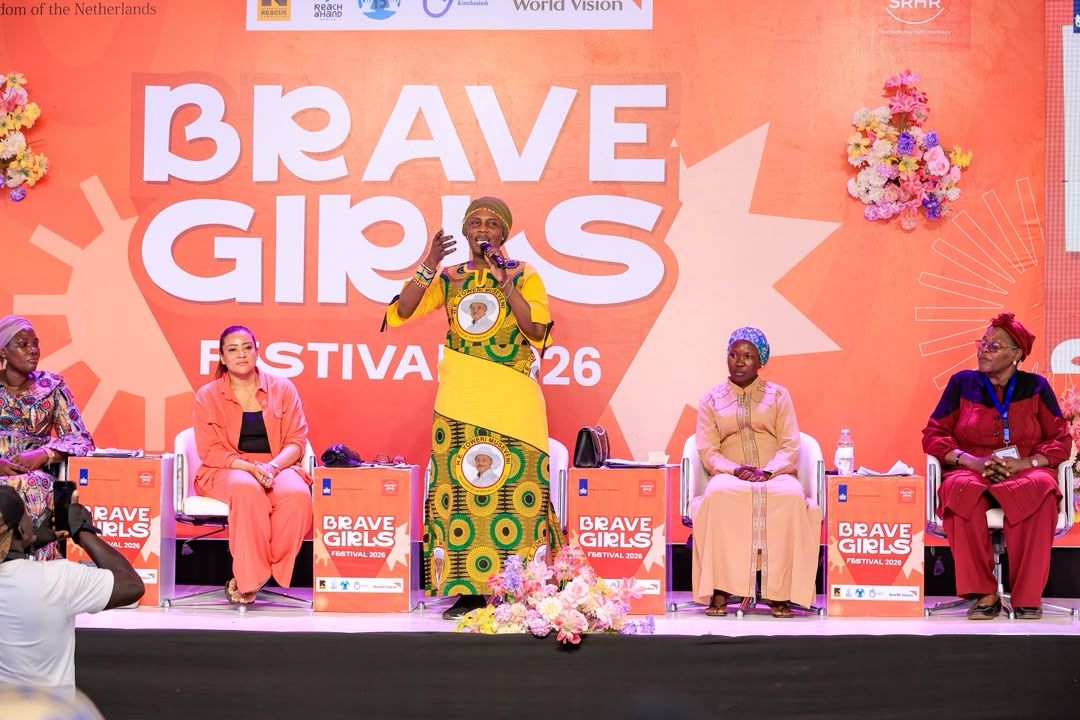
The Chief Guest, Hajjat Medina Naham Ojale, Director of Fin & Admin - NRM party
Health workers at the festival also highlighted teenage pregnancy and limited access to adolescent sexual and reproductive health services as major concerns. Ms Maturu Irene, a midwife at Yumbe Health Centre III, identified delayed decisions to seek care, delayed referrals, transport challenges, inadequate birth preparedness, teenage pregnancy and non-institutional deliveries among factors contributing to poor maternal health outcomes.
She called for expanded youth-friendly health services, safer learning environments, comprehensive sexuality education and the reintegration of adolescent mothers into the education system.
According to Yumbe District Health Management Information System data cited at the festival, teenage pregnancy cases rose sharply during the COVID-19 lockdown period, exceeding 7,000 cases over the multi-month lockdown. The figure was estimated at 5,740 cases in the 2023/2024 financial year.
The Brave Girls Festival was organised under the PROTECT Sexual and Reproductive Health and Rights (SRHR) Project, a four-year initiative running from 2024 to 2028 and funded by the Embassy of the Kingdom of the Netherlands in Uganda.
The project is implemented by the International Rescue Committee, Reach A Hand Africa, Humanity & Inclusion and World Vision Uganda.
It focuses on improving access to sexual and reproductive health services, strengthening education systems, transforming harmful social and gender norms, economic empowerment and inclusive governance across six districts in West Nile.
For girls like Susan, however, the message from the festival goes beyond statistics and programs. It is about having someone listen, having a safe environment to learn and having the support needed to remain in school.
Her story also highlights how challenges at home can quickly become barriers to education—and how intervention by a teacher, parent, community leader or institution can make a difference in keeping a girl in school.

