Koboko Girls Call for Free Sanitary Pads to Keep Girls in School
Girls in Koboko District have called on the government and development partners to provide free sanitary pads, saying lack of access to menstrual hygiene products can affect girls’ education, confidence, and vulnerability to teenage pregnancy.
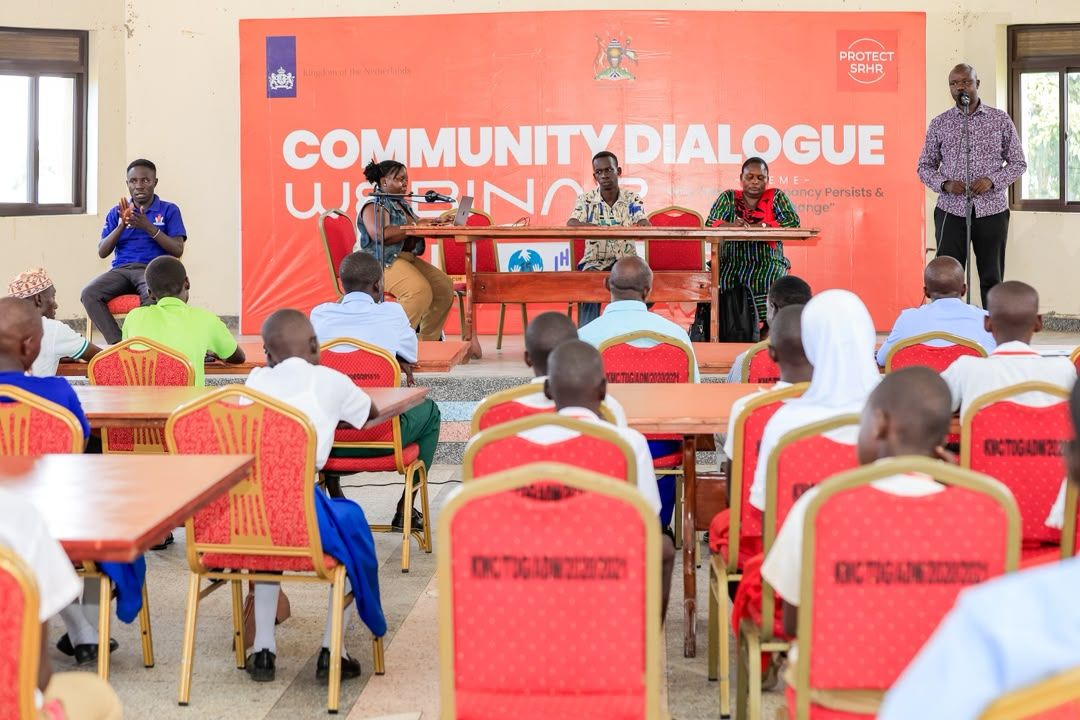
The call was made on 29 September 2026 during a community dialogue webinar held under the Protect Sexual and Reproductive Health and Rights (PROTECT SRHR) Project, bringing together learners, teachers, community stakeholders, and development partners to discuss the persistent challenge of teenage pregnancies.
The dialogue was held under the theme “Why Teenage Pregnancies Persist and What Must Change” as part of the Link. Learn. Act. monthly webinar series, which provides a platform for stakeholders from different African countries to share experiences and approaches to addressing teenage pregnancy.
For the girls who participated in the dialogue, access to sanitary pads is more than a menstrual hygiene issue. They said it is closely connected to their ability to remain in school and avoid situations that may expose them to risky relationships.
Patience Fatima, a Senior Three student at Nyarilo Secondary School, urged government and non-governmental organisations to support girls with sanitary products.
“As girls, we are asking the government and NGOs to support us by providing sanitary pads,” she said.
She added that providing sanitary pads could reduce the pressure that pushes some girls into risky relationships to meet basic needs.The concerns were echoed by Ayikoru Gladys, a Senior Woman Teacher at Ombachi Self Help Primary School, who said more support is needed from parents, teachers, communities and leaders to ensure girls remain in school.She noted that some girls struggle to access sanitary pads at home and are sometimes forced to use old pieces of cloth, affecting their confidence and ability to manage their periods properly.
The dialogue also focused on the role young people can play in preventing teenage pregnancies. Ayikoru Sumaya, a student from Nyarilo Secondary School, encouraged girls and boys to prioritise education and make decisions that protect their future.
She also urged young people to be careful about the groups they associate with, encouraging them to seek spaces where they can access knowledge, support and guidance.Participants were also encouraged to ensure that girls who become pregnant are not abandoned.
The Senior Woman Teacher said teenage mothers should be supported to return to school and could use their experiences to educate other young people about the consequences of early pregnancy.
Benson Muhindo, Director of Programmes at Reach A Hand Africa, said the dialogue was deliberately combined with a physical community engagement in Koboko to allow stakeholders to hear directly from young people and communities affected by teenage pregnancy.
He said the monthly webinars provide an opportunity to benchmark Uganda's experience against approaches being used in other African countries.
Muhindo noted that Uganda's teenage pregnancy challenge requires continued reflection and collaboration among stakeholders.
According to him, stakeholders must continue exploring practical solutions to the social, economic and health factors contributing to teenage pregnancies.
The dialogue was organised under PROTECT SRHR, a four-year project running from 2024 to 2028 with funding from the Embassy of the Kingdom of the Netherlands in Uganda.The project is implemented by a consortium comprising the International Rescue Committee, Reach A Hand Africa, Humanity & Inclusion and World Vision Uganda, and focuses on improving sexual and reproductive health and social well-being among adolescents, young people and women in Uganda's West Nile region.
The project is being implemented across six districts, 89 sub-counties, 167 health facilities and 952 schools, reaching an estimated population of more than 2.2 million people.Its interventions focus on sexual and reproductive health services, education, economic empowerment, social and gender norms, innovative financing, governance, and accountability.
For the girls of Koboko, however, the message from the dialogue was straightforward: access to sanitary pads remains a basic need that can help girls stay in school, protect their dignity and strengthen their ability to pursue their future.

